The question underneath the question
People ask for a roof when the problem is glare, and ask for blinds when the problem is rain coming in sideways. Those are different failures and they have different fixes.
Start with when the space is unusable. If it is unusable at two in the afternoon because the sun is on it, that is a shading problem. If it is unusable during a downpour because water lands on the furniture, that is a shelter problem. If it is both, you need both, and the order matters: the roof goes up first because the blind tracks fix to it.
What a fixed roof does, and does not do
A composite panel or fluted aluminium roof gives you permanent overhead cover. Rain falling vertically stops. Direct overhead sun stops. The space becomes usable in wet weather without anyone touching a switch.
What it does not do is stop low sun. Singapore sits close to the equator, so the sun is high for most of the day and a roof handles it, but at either end of the day light comes in almost horizontally under the roof edge. A roof alone will not fix an afternoon glare problem on a west-facing balcony.
It also does not stop wind-driven rain. In a squall the rain arrives at an angle and goes straight under the roof.
What zip blinds do, and do not do
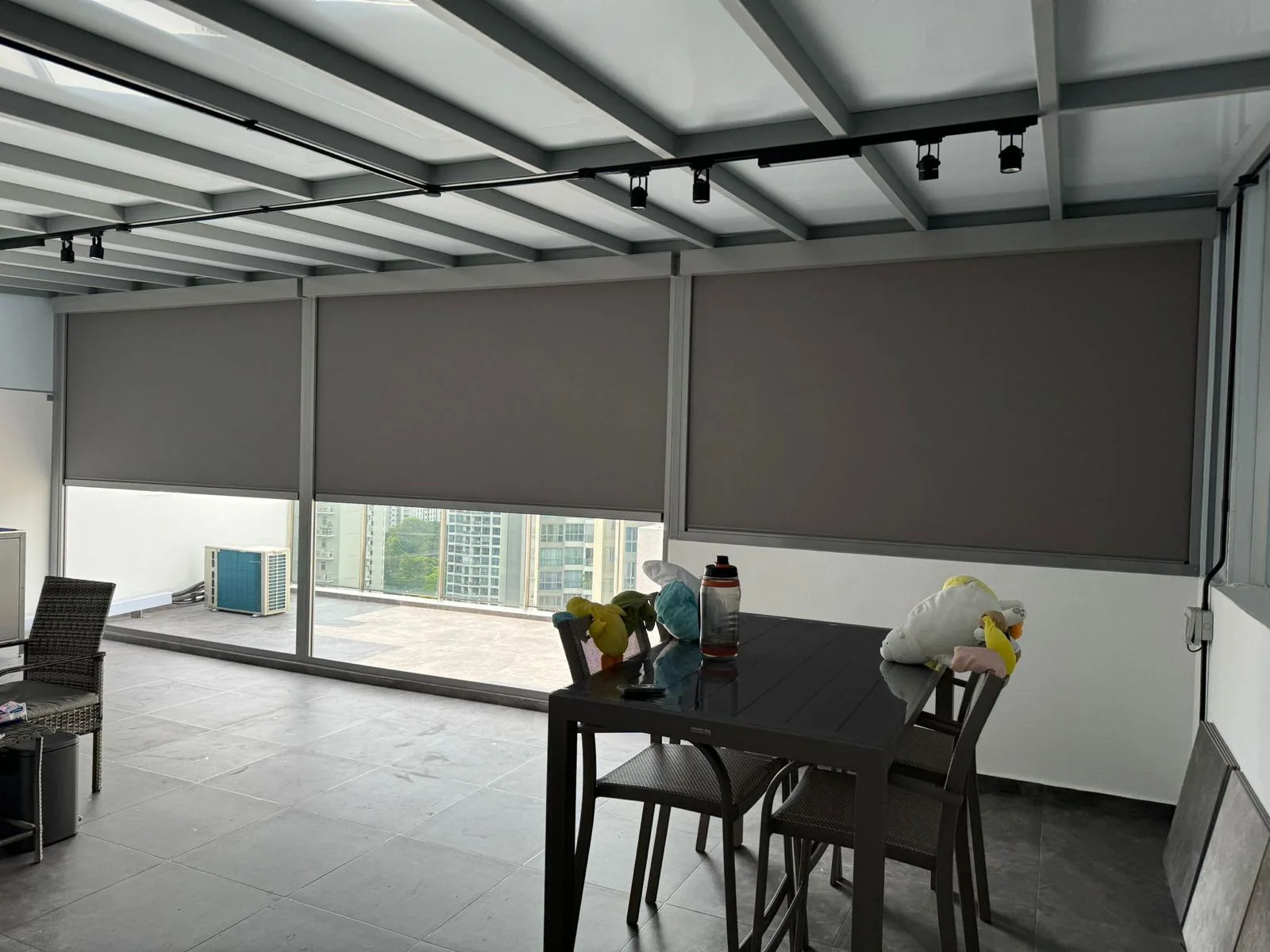
A zip blind is a fabric screen running in side tracks. The fabric edge is welded into a zip that sits inside the track, so the screen cannot lift, flap or gap at the sides. That is the whole engineering point and it is why it holds in wind when a normal roller blind does not.
Dropped, it takes the low sun and the wind-driven rain off the space. With a one percent openness fabric you keep the view through it. With a zero percent fabric you do not, but you get the full block.
What it does not do is give you permanent overhead cover. A blind is a wall, not a roof. If nothing is above it, rain still lands on the floor.
The honest combinations
Roof only. Right when the space is already sheltered on the sides, or when the problem is purely overhead rain. Drying yards and utility areas usually need nothing more.
Blinds only. Right when you already have a slab, an upper balcony or an existing roof overhead and the problem is sun, glare or rain blowing in at the open side. This is most condominium balconies.
Both. Right when you are building an outdoor room from open ground, and it is what most landed jobs end up as. The roof defines the room and the blinds close the sides when the weather turns.
What to check before you commit either way
Which direction the space faces, and at what time of day it becomes unusable. That single answer decides most of it.
What is directly overhead. A blind is much cheaper to install under something that already exists.
Whether you need the view kept. That decides the fabric openness, not the system.
If you are in a condominium, what your MCST allows on the facade. Most require written approval before anything is fixed to the exterior, and colour is usually part of that approval.